India forces caller-ID apps to feed spam reports to telcos
Published
What's this about?
Truecaller says the one-way sharing requirement would hand a commercially valuable proprietary asset to telecom operators.
The one-panel cartoon
Read the cartoon's script
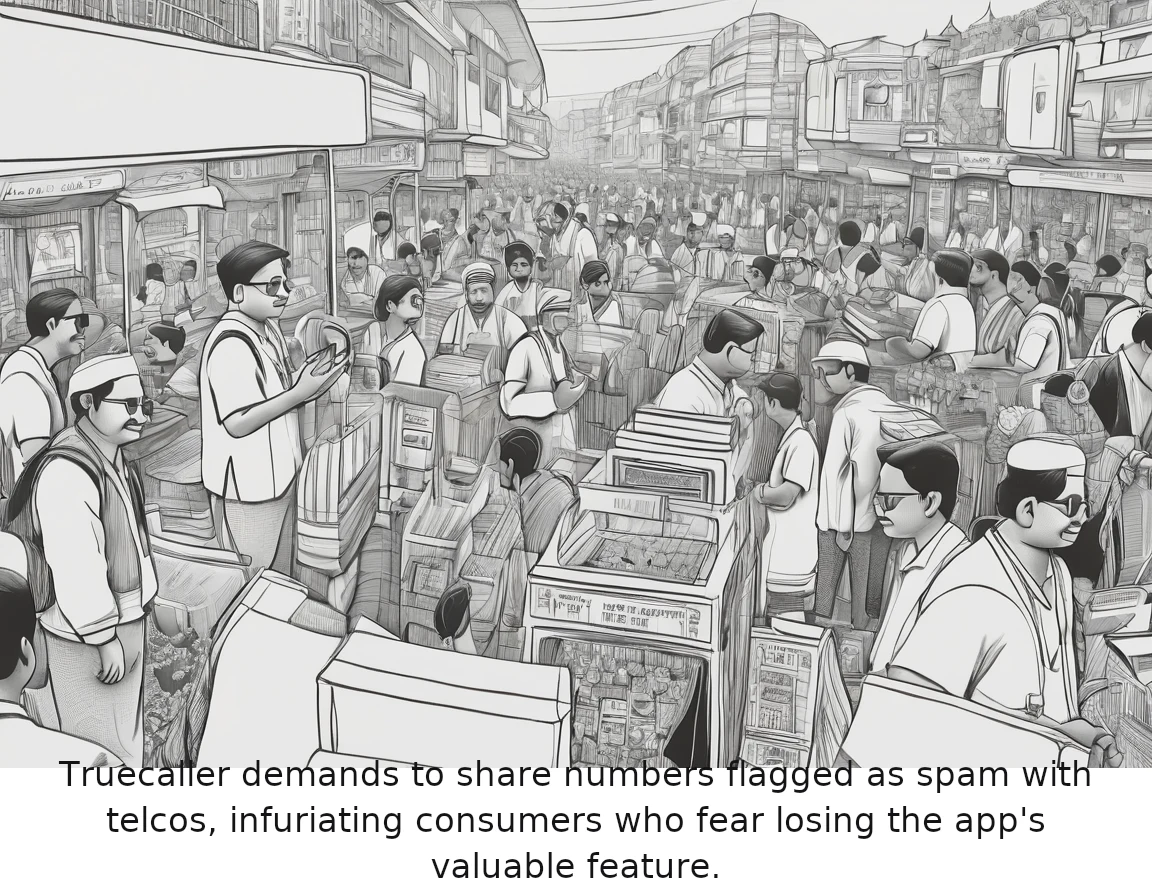
Caption: Truecaller demands to share numbers flagged as spam with telcos, infuriating consumers who fear losing the app's valuable feature.
Read the full 3-panel strip
Based on the original story on techcrunch.com.
Editor's note
This policy move by Indian authorities towards forcing caller-ID apps to share spam reports with telcos could undermine the privacy and control users have over their data. By allowing telecom operators to access this potentially valuable feedback, it could shift power dynamics and compromise user trust in these apps.
Rate this comic
Read the script
Panel 1
Alex, holding a smartphone, is typing furiously on a tablet. He looks up at the camera with an optimistic grin. Sam, looking at Alex from the background, snorts. Sam (deadpan)
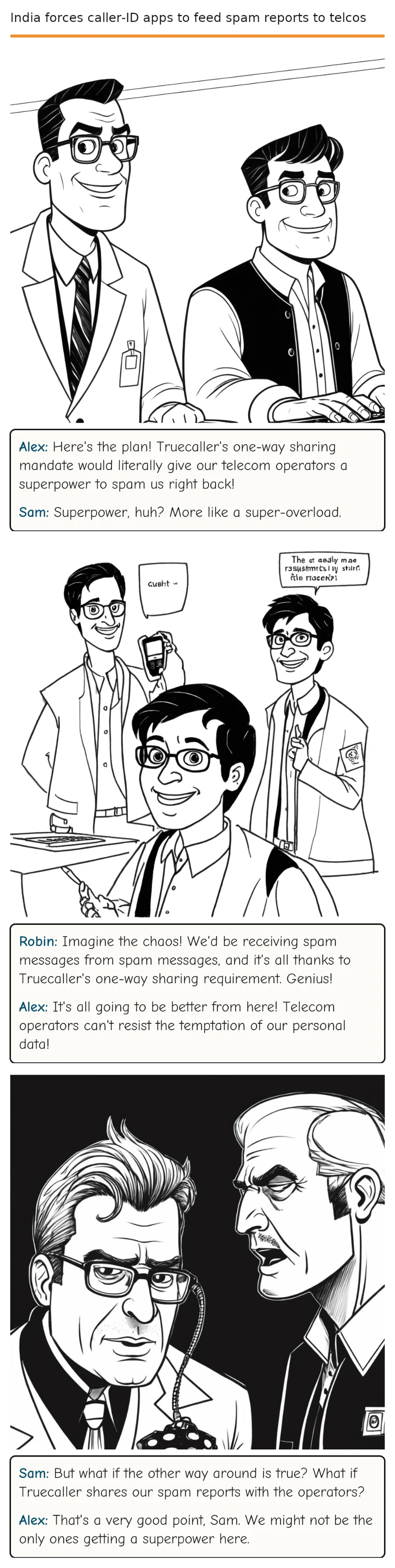
Alex: Here's the plan! Truecaller's one-way sharing mandate would literally give our telecom operators a superpower to spam us right back!
Sam: Superpower, huh? More like a super-overload.
Panel 2
Robin, with a chaotic grin, is holding up a phone with spam messages flashing on the screen. Robin (chaotic) Alex nods, impressed by Robin's wild ideas. Alex (optimistic)
Robin: Imagine the chaos! We'd be receiving spam messages from spam messages, and it's all thanks to Truecaller's one-way sharing requirement. Genius!
Alex: It's all going to be better from here! Telecom operators can't resist the temptation of our personal data!
Panel 3
The camera pans back to Alex and Sam. Sam (deadpan) Alex (scratching his head)
Sam: But what if the other way around is true? What if Truecaller shares our spam reports with the operators?
Alex: That's a very good point, Sam. We might not be the only ones getting a superpower here.
Comments