India forces caller-ID apps to feed spam reports to telcos
Published
What's this about?
Truecaller says the one-way sharing requirement would hand a commercially valuable proprietary asset to telecom operators.
The one-panel cartoon
Read the cartoon's script
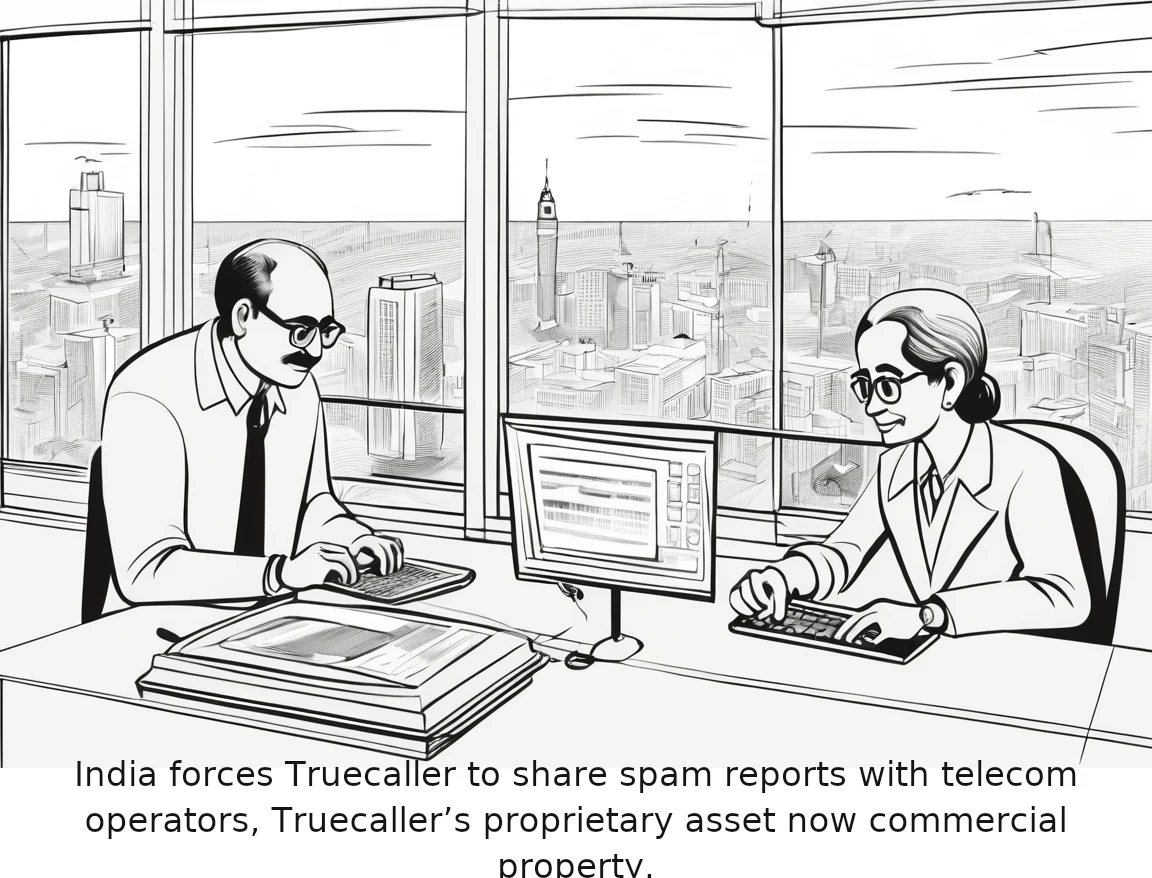
Caption: India forces Truecaller to share spam reports with telecom operators, Truecaller’s proprietary asset now commercial property.
Read the full 3-panel strip
Based on the original story on techcrunch.com.
Editor's note
This move by India to require caller-ID apps to share spam reports with telcos raises concerns about handing over a valuable asset to the very companies the apps are designed to monitor. It’s a move that could compromise user privacy and reduce the effectiveness of these apps in curbing spam, as the apps might not have the autonomy to report false positives.
Rate this comic
Read the script
Panel 1
Alex (holding a smartphone with a playful grin)
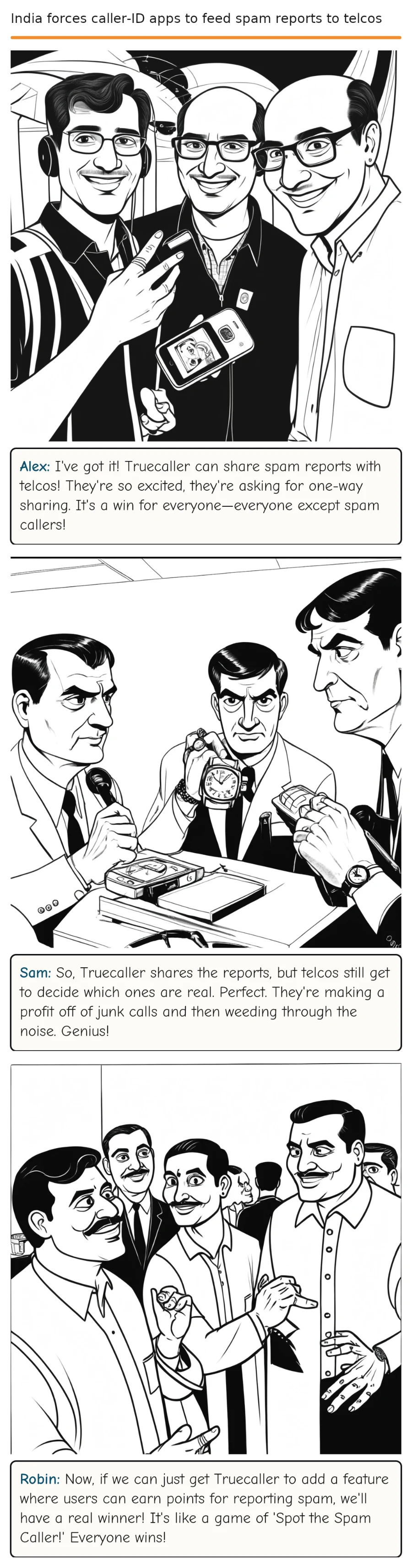
Alex: I've got it! Truecaller can share spam reports with telcos! They're so excited, they're asking for one-way sharing. It's a win for everyone—everyone except spam callers!
Panel 2
Sam (nodding sagely, looking at his watch)
Sam: So, Truecaller shares the reports, but telcos still get to decide which ones are real. Perfect. They're making a profit off of junk calls and then weeding through the noise. Genius!
Panel 3
Robin (clapping his hands, eyes wide with excitement)
Robin: Now, if we can just get Truecaller to add a feature where users can earn points for reporting spam, we'll have a real winner! It's like a game of 'Spot the Spam Caller!' Everyone wins!
Comments